New Virginia law led by VACEP and physician legislator will improve fairness in Virginia Board of Medicine reviews
Here’s what emergency physicians need to know
For many physicians, receiving notice of a Virginia Board of Medicine complaint can be one of the most stressful experiences of their career — even when the complaint is unfounded and ultimately dismissed.
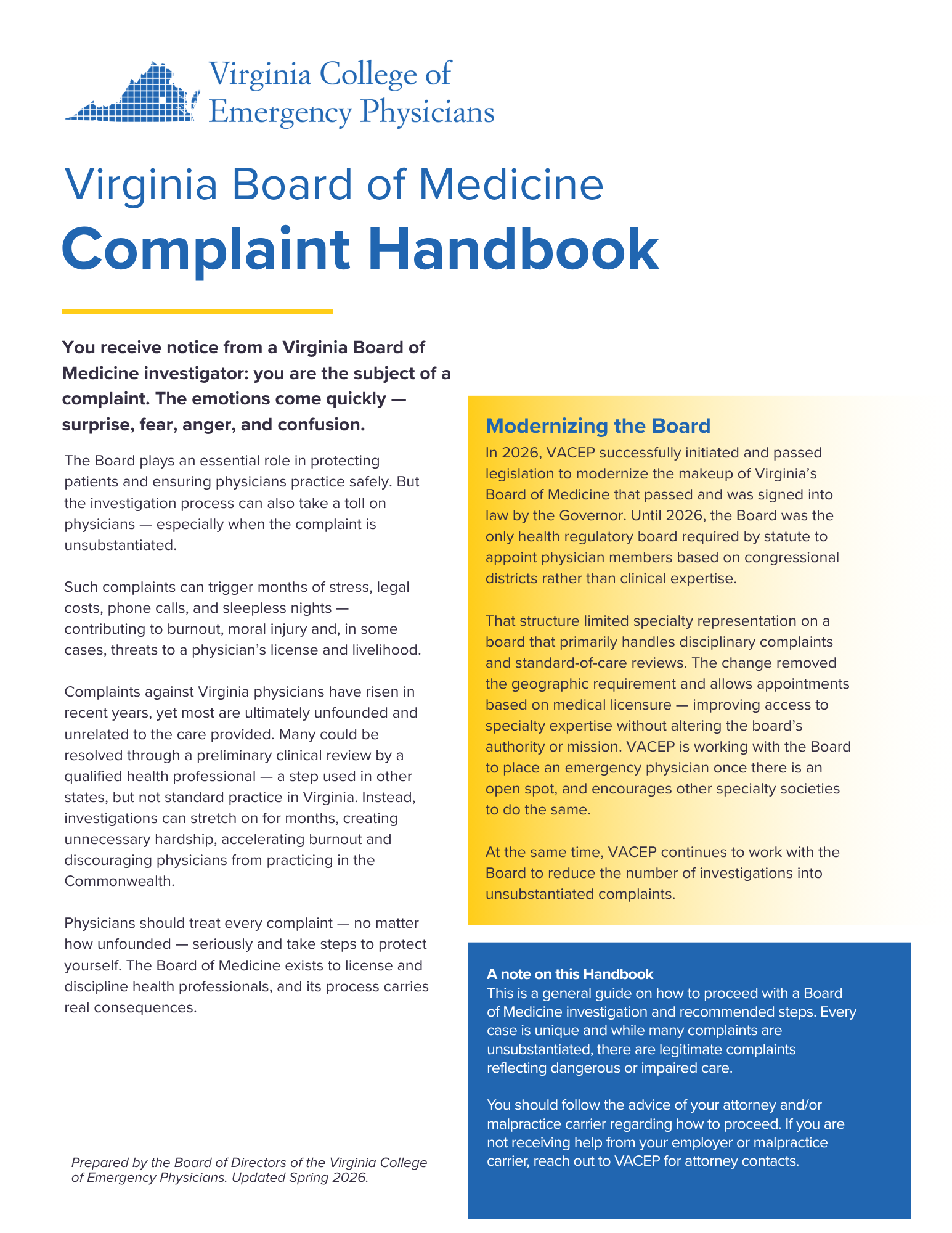
That reality helped drive support for VACEP’s House Bill 1139, patroned by Del. Mark Downey of Williamsburg and introduced during the 2026 General Assembly session. The “Downey Bill” modernizes how physician members are appointed to Virginia’s Board of Medicine, removing an outdated requirement that tied physician seats to congressional districts rather than clinical expertise.
Under prior law, Virginia’s Board of Medicine was the only healthcare regulatory board in the Commonwealth required to appoint physicians geographically. VACEP argued that structure may unintentionally limit specialty representation on a board responsible for reviewing complex clinical complaints and evaluating standards of care.
The bill was signed in April by Gov. Abigail Spanberger and, as with many other bills, becomes law on July 1.
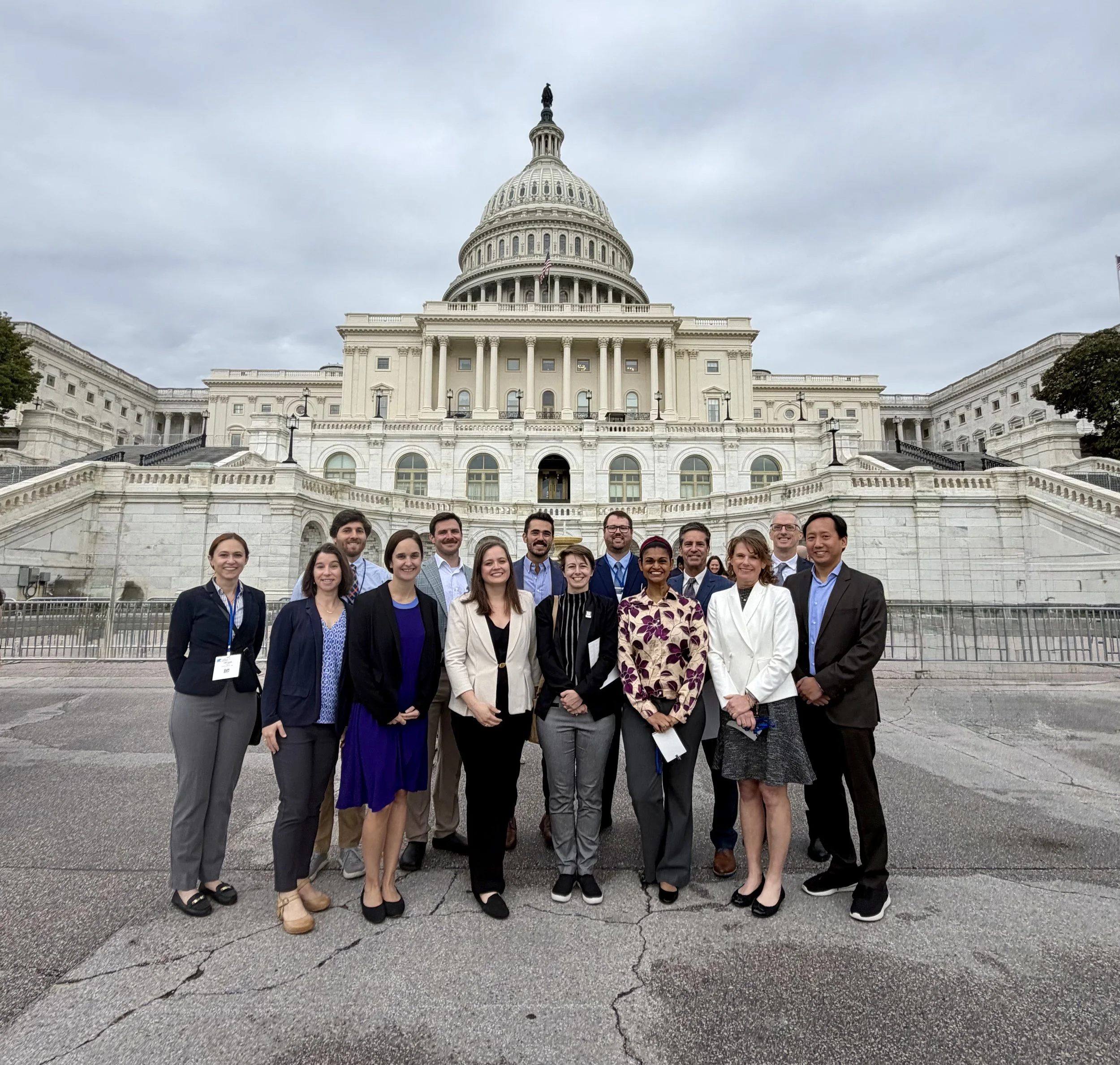
You fight for your patients. VACEP fights for you.
Of more than 1,000 emergency physicians in Virginia, not even half are members of the American College of Emergency Physicians or our Virginia chapter. Let’s change that. Support our efforts to protect your practice and the patients under your care. Join ACEP and VACEP now.
How the bill works
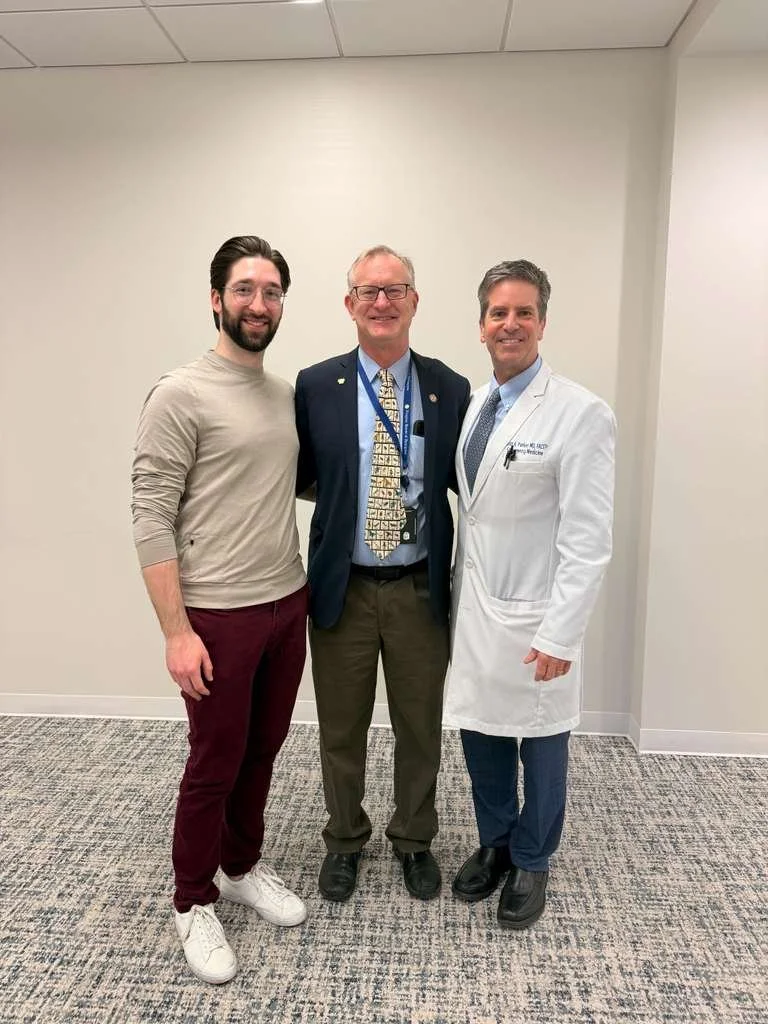
VACEP leaders advocated for House Bill 1139 with legislators during this year’s General Assembly. Members are pictured here with Del. Mark Downey, a Williamsburg pediatrician and freshman delegate. Downey is the first physician in the General Assembly in three years.
The Downey Bill does not expand the Board’s authority or change disciplinary standards. Instead, supporters say it allows appointments to better reflect the clinical realities of modern medicine by improving access to physicians with relevant specialty expertise.
For emergency physicians, the issue is especially significant.
Emergency medicine generates hundreds of Board complaints annually in Virginia, many tied to the high-risk, high-volume and high-acuity nature of emergency care. VACEP leaders have argued that even unfounded complaints can create major professional and emotional burdens for physicians, including legal costs, reputational concerns, burnout and time-consuming investigations.
“Emergency medicine is practiced in a uniquely high-pressure environment, where physicians make critical decisions with limited information and under extraordinary time pressure,” says Joran Sequeira, MD, FACEP, president of the Virginia College of Emergency Physicians. “Physicians deserve a review process informed by appropriate clinical expertise and grounded in the realities of modern medicine. Improving fairness, transparency, and confidence in the Board process benefits not only physicians, but the patients and communities they serve.”
so what’s next?
Complaints against Virginia physicians have risen in recent years, yet most are ultimately unfounded and unrelated to the care provided.
At the same time, VACEP continues to work with the Board to reduce the number of investigations into unsubstantiated complaints.
For example: Many complaints could be resolved through a preliminary clinical review by a qualified health professional — a step used in other states, but not standard practice in Virginia. Many cases also do not meet the threshold for an in-person investigation and can be easily resolved by reviewing the response and records, and perhaps a phone call. We’ll have more to share as our work progresses.